Debt-Free Weddings: How Moissanite Stone is Redefining Modern Luxury
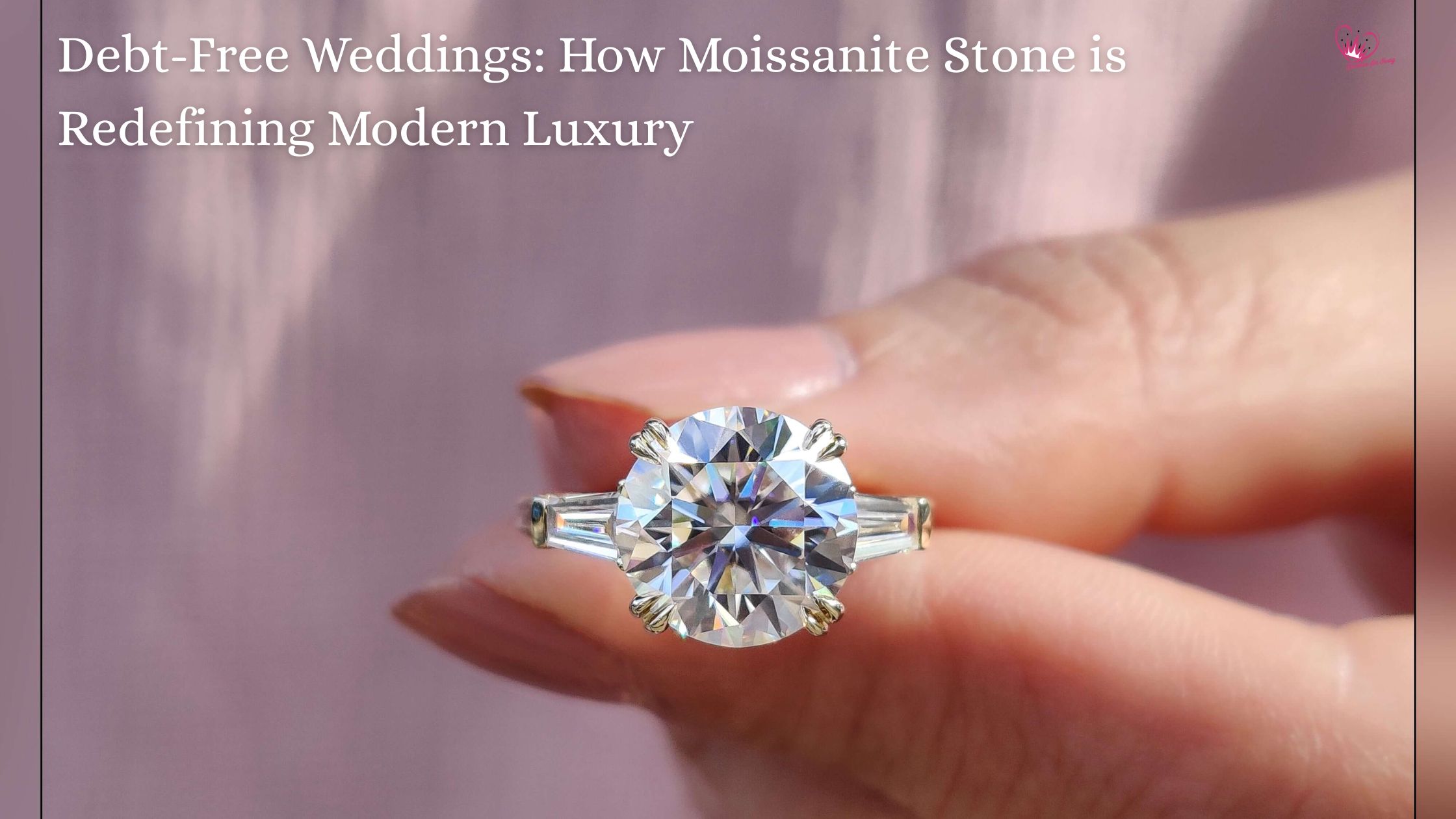
For decades, the standard of a “successful” proposal was measured by the size and cost of the diamond. Inspired by the “three months’ salary” rule – a marketing masterstroke from the mid-20th century – many couples begin their lives together under the shadow of high-interest credit card balances or personal loans. However, in 2026, the definition of luxury has changed. Modern couples are giving priority to financial intelligence over traditional status symbols. They prefer to invest in home down payments, travel, and high-yield savings rather than asset depreciation. At the center of this “value revolution” is moissanite stone – a gemstone that not only rivals diamonds in beauty, but systematically outperforms it in the metrics that matter to the modern, debt-conscious buyer.
1. The Science of the Sparkle: Why Moissanite Outshines
To the untrained eye, moissanite and diamond are indistinguishable. However, for the scientist, moissanite is the clear winner in visual display.
Light and fire
A gemstone’s “shine” is a combination of brilliance (white light reflection) and fire (rainbow-like flashes of light).
- Refractive index: Moissanite has a refractive index of 2.65 – 2.69, which is much higher than diamond’s 2.42. This means that moissanite literally bends and reflects more light.
- Spread: This is the “fire” of the stone. The expansion of moissanite (0.104) is more than twice that of diamond (0.044). In natural sunlight or candlelight, moissanite displays a vivid, kaleidoscopic “disco ball” effect that diamonds cannot easily compare.
By choosing moissanite, you are not compromising a “simulant”; You are choosing a stone with superior optical properties.
2. The Debt-Free Mathematics: A 2026 Price Comparison
In 2026, the economic gap between mined diamonds and moissanite had become a chasm. While lab-grown diamonds have made the market more accessible, moissanite remains the ultimate “budget optimizer.”
| Carat Weight | Mined Diamond (D-F / VVS) | Lab-Grown Diamond | Moissanite (Colorless) |
| 1.0 Carat | $6,000 – $12,000 | $1,400 – $3,000 | $300 – $800 |
| 2.0 Carat | $12,000 – $25,000 | $2,500 – $5,000 | $600 – $1,200 |
| 3.0 Carat | $25,000+ | $5,000 – $9,000 | $1,500 – $2,500 |
Note: Prices include high-quality platinum or 14k gold settings.
Choosing a 2-carat moissanite over mined diamonds saves a couple about $15,000 to $20,000. In a year where the average home down payment has increased significantly in many metropolitan areas, that “ring money” is often the difference between being a renter and being a homeowner.
3. Durability for a Lifetime
A common myth is that only diamonds are “forever.” While diamonds are the hardest known natural minerals (10 on the Mohs scale), moissanite is right at its peak.
Ranking 9.25 – 9.5, moissanite is the second hardest gemstone in the world that is used in jewelry. It is harder than sapphire (9.0) and emerald (7.5).
- Scratch Resistance: It is almost impossible to scratch moissanite in daily life unless you are rubbing it on a diamond or another piece of moissanite.
- Heat Tolerance: Moissanite can withstand temperatures up to 2,730 degrees Celsius – higher than even diamond. This means it can safely handle a jeweler’s torch without the risk of it changing shape or breaking during future repairs.
4. Ethical Brilliance: The Conscious Choice
Modern luxury is defined by integrity. As Gen Z and Millennial couples enter the wedding market in record numbers, the “origin story” of their jewelry matters as much as the aesthetics.
Despite the Kimberley Process, mined diamonds still carry the burden of environmental degradation and complex labor histories. Moissanite is 100% laboratory manufactured, ensuring:
- Conflict-free status: guaranteed sourcing and ethical labour.
- Eco-friendly: Zero land displacement, zero water pollution, and a significantly lower carbon footprint than mining operations.
- Purity: Because they are grown in controlled environments, moissanite stones are almost always “clean to the eye” with fewer inclusions than natural stones.
5. Reallocating the “Wedding Tax.”
When you choose a moissanite engagement ring, you are effectively opting out of the “wedding tax” – an arbitrary markup imposed on the industry. Debt-free weddings aren’t about “cheapness”; They’re about wealth-building.
Imagine you reallocated the $10,000 you saved in the ring into a diversified index fund or high-yield savings account (HYSA) at competitive rates through 2026:
- Scenario A: You purchase a $12,000 diamond on a 24-month credit plan. Including interest, you pay $14,500 over two years.
- Scenario B: You buy a moissanite ring worth $1,200 in cash. You invest the remaining $10,800. Over 10 years, at a 7% return, that “ring money” has grown to more than $21,000.
Modern luxuries include the ring and compound interest.
6. The 2026 Trends: Customization and Color
Because moissanite is so affordable, it allows couples to be creative with customizations that would be prohibitively expensive with diamonds.
- Fancy shapes: Unique cuts like Escher, Radiant, and Marquis are dominating 2026 bridal trends.
- Hidden Halo: Adding a secret row of sparkles beneath the main stone is a popular way to add subtle luxury.
- Champagne and Mint: Colored moissanite is on trend for “non-traditional” brides who want their rings to reflect their unique personality.
Conclusion: A New Symbol for a New Era
An engagement ring symbolizes a promise – a commitment to a shared future. By choosing moissanite, couples are making a promise not only to each other, but also to their financial future. They are choosing a stone that is brighter, harder, and more ethical than the traditional option.
In 2026, the final flex is not a debt-heavy diamond. This is a beautiful, fiery moissanite ring on the finger of a couple who are heading into their wedding with their heads held high and their bank accounts intact. Luxury is not about how much you spend; It matters how well you live.