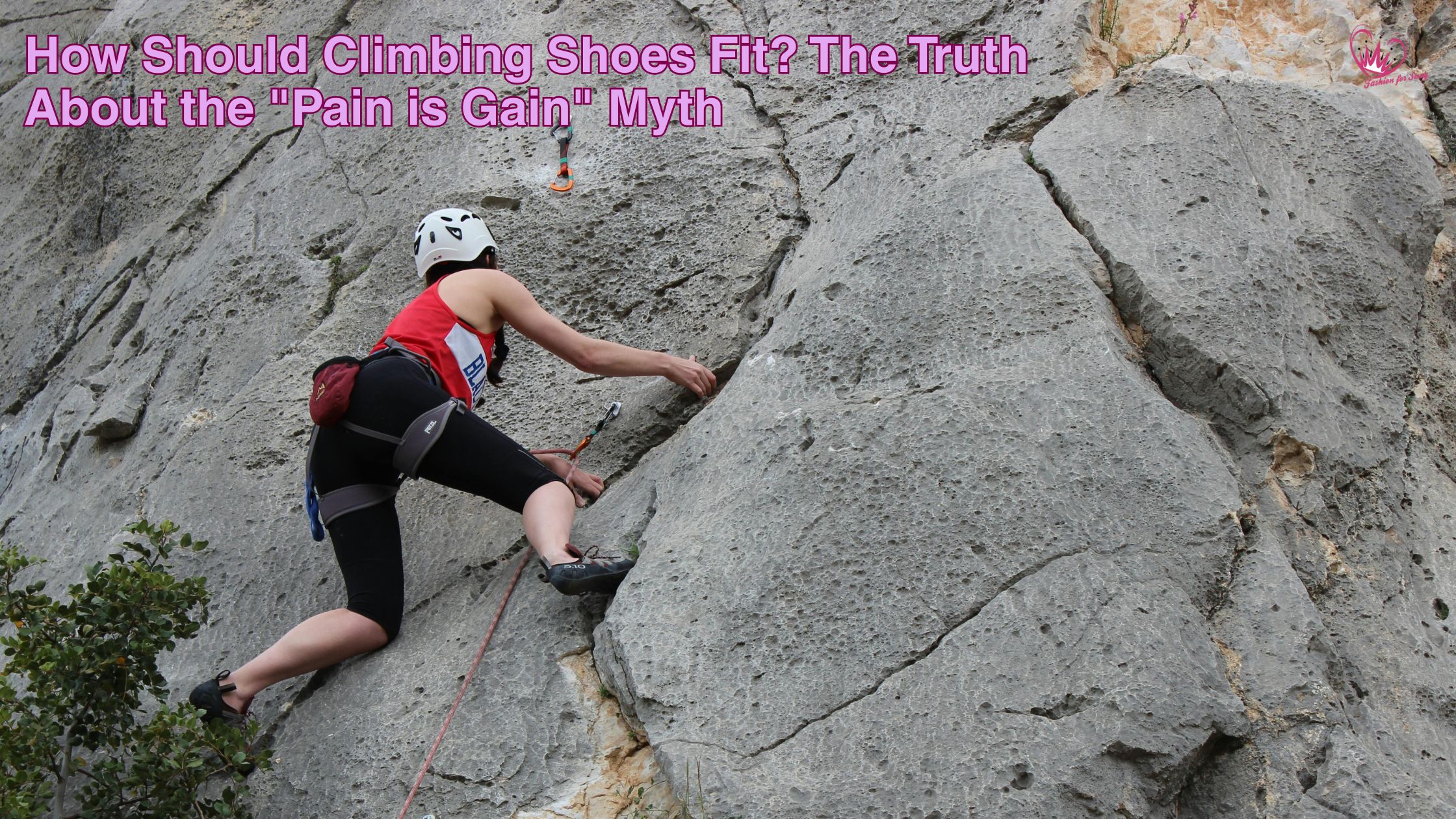
How Should Climbing Shoes Fit? The Truth About the “Pain is Gain” Myth
If you walk into any climbing gym and head toward the bouldering cave, you’ll likely see a common ritual: a climber finishes a route, drops to the floor, and immediately rips their shoes off their feet with a collective groan of relief.
For decades, the “old guard” of climbing has passed down a specific piece of advice to beginners: “Buy your shoes two sizes too small. If they don’t hurt, they aren’t tight enough.” This “Pain is Gain” philosophy suggests that to climb hard, you must sacrifice your toenails and the structural integrity of your metatarsals.
But as we move through 2026, shoe technology has evolved, and sports podiatry has entered the conversation. The verdict is in: Extreme pain does not equal better performance. In fact, shoes that are too tight can actually hinder your climbing and lead to long-term foot deformities.
Here is the truth about how climbing shoes should actually fit, the science of performance, and how to find your “Goldilocks” pair.
The Anatomy of a Climbing Shoe Fit
Unlike a running shoe, which is designed for comfort and impact absorption, a climbing shoe is a tool designed for precision and power transfer. To achieve this, the shoe must eliminate “dead space” (pockets of air) so that when you push off a tiny granite edge, the force from your leg goes directly into the rock, not into a sliding foot.
1. The Toe Box: The “Power Point”
In a properly fitted climbing shoe, your toes should be slightly curled or “crimped.” This position allows you to use your toes like a claw.
- The Myth: Your toes should be crushed into a painful ball.
- The Reality: Your toes should touch the end of the shoe with no wiggle room, but you should still be able to feel the rock. If your toes are overlapping or your joints are screaming, you’ve gone too small.
2. The Heel Cup: The Anchor
A loose heel is the death of a good heel hook. When you pull on the shoe, there should be no gaps around your Achilles or under your heel bone.
- The Test: Pull the shoe on and try to “peel” the heel off with your hand. If it pops off easily, the shoe is too big or the “last” (the shape of the shoe) doesn’t match your foot’s anatomy.
3. The Arch and Tension Rand
The rubber wrap that runs around the heel and under the arch is called the “rand.” This is what provides the tension that pushes your toes forward into the toe box. A good fit will feel like a firm, supportive hug around your entire midfoot.
Why the “Pain is Gain” Myth is Over
So, why did we ever think pain was necessary? In the early days, climbing shoes were made of unlined leather that stretched significantly. Climbers bought them tiny, knowing they would expand. Modern shoes, however, are a different beast.
1. Synthetic Materials Don’t Stretch
Many modern performance shoes are made from synthetic microfibers or lined leather. These materials are designed to not stretch. If a synthetic shoe hurts in the store, it will likely hurt six months from now. Buying them “painfully small” is simply a recipe for a miserable season.
2. Pain Kills Technique
When your feet hurt, you stop standing on your toes correctly. You start “smearing” with the side of your foot or rushing your movements to get off the wall faster. Good climbing is about precision and calm. It is impossible to be precise when your brain is screaming about a pinched nerve in your big toe.
3. Long-Term Damage
Podiatrists are seeing an increase in “climber’s foot”—bunions, hallux valgus, and neuromas caused by extreme downsizing. While a pro climber might downsize for a 10-minute world-cup final, the average gym climber spending two hours a night on the wall is doing irreversible damage to their bone structure for a marginal gain in “edge-ability.”
Matching the Fit to Your Style
Not all climbing requires the same level of “tightness.” Your fit should be dictated by what you actually climb.
| Climbing Type | Recommended Fit | Shoe Shape |
| Indoor Bouldering | Snug, no dead space | Moderate to Aggressive |
| Gym Routes/Top Rope | Comfortable for 15+ mins | Neutral to Moderate |
| Multi-Pitch/Trad | “All-day” comfort (flat toes) | Neutral |
| Overhung Sport | Very snug, downturned toe | Aggressive |
5 Tips for Buying Your Next Pair
1. Shop in the Afternoon
Your feet swell throughout the day, especially if you’ve been walking or standing. Trying on shoes at 4:00 PM will give you a much more accurate representation of how they will feel mid-session than a morning fitting.
2. Bring Your Own Socks (Or Lack Thereof)
Decide if you are a “socks” or “no socks” climber. Socks add volume. If you plan to climb in thin socks for hygiene, wear them during the fitting. Most performance climbers go barefoot for better “feel,” but there is no shame in the sock game.
3. The “Stand Test”
Find a small ledge or the edge of a stair in the shop. Stand on your tiptoes. Does the shoe support you, or does your foot “roll” inside the shoe? If it rolls, it’s too big. If you can’t put weight on it because of the pain, it’s too small.
4. Account for Brand Sizing
A Size 42 in La Sportiva is not the same as a Size 42 in Scarpa or Five Ten. La Sportiva is notorious for running large (meaning you downsize more), while Scarpa tends to be closer to street shoe size. Always check a brand-specific sizing chart before ordering online.
5. Don’t Ignore the “Hot Spots”
A “hot spot” is a specific point of pressure, usually on a knuckle or the back of the heel. If a shoe has a hot spot during a 5-minute fitting, it will become a blister within 20 minutes of climbing. Different brands use different “lasts” (molds); if one brand gives you hot spots, try a different brand rather than a different size.
The Breaking-In Period
Even a perfectly fitted shoe requires a break-in period. For the first few sessions:
- Wear them for 10 minutes at a time. Take them off between boulders.
- Use the “Plastic Bag Trick.” If the shoes are hard to pull on, put a small plastic bag over your heel. It helps your foot slide into the heel cup and reduces friction while the materials settle.
- Heat them up. Wear them around the house with socks for 15 minutes to let the rubber and glue warm up and mold to your foot shape.
Final Thoughts: Trust Your Feet, Not the Hype
The “truth” is that a climbing shoe should be tight, but not painful. It should feel like a second skin, providing a sense of security and power. If you find yourself dreading your climbing sessions because of foot pain, your shoes are wrong.
In 2026, we have the technology to climb at our limit without destroying our bodies. Choose a shoe that fits your foot shape, matches your climbing style, and allows you to focus on the movement, not the misery.