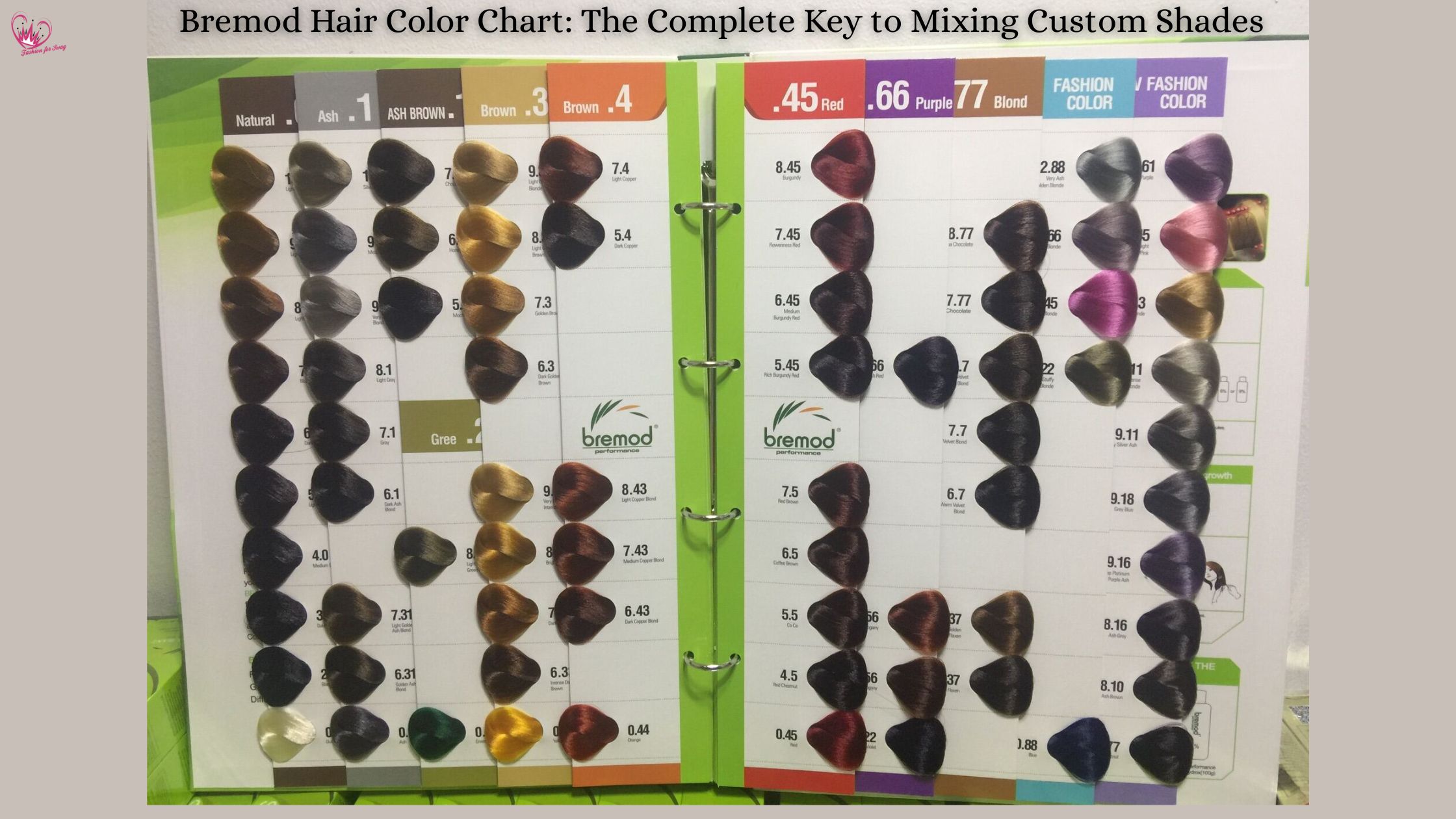
Bremod Hair Color Chart: The Complete Key to Mixing Custom Shades
Bremod has become a favorite among DIY colorists and budget-conscious professionals, known for its vibrant results and affordability. However, achieving those salon-quality, exclusive colors requires going beyond simply choosing a shade from the box. The true power of the Bremod line lies in its system—the Bremod Hair Color Chart—which is the entire key to understanding and mixing custom shades.
If you’ve ever wanted to create the perfect smoky ash, a rich mahogany that catches the light, or a uniquely balanced blonde hue, this in-depth guide is for you. We’ll decode Bremod color nomenclature, explain the science of levels and tones, and provide the formulas and techniques needed to mix your own stunning custom colors.
Decoding the Bremod Hair Color Chart
The basis of custom color mixing is understanding the numbering system. Like most professional color lines, Bremod uses a standardized, three-part numbering convention that tells you everything you need to know about the final color result.
A typical Bremod shade number looks like this: 7.45
1. The Number Before the Decimal (The Level)
The first number indicates the level or depth of the color. This means that tone is regardless of how light or dark the color is. Bremod follows a universal scale, ranging from 1 (blackest) to 10 (lightest blonde).
| Level | Description |
| 1 | Black |
| 2 | Very Dark Brown |
| 3 | Dark Brown |
| 4 | Medium Brown |
| 5 | Light Brown |
| 6 | Dark Blonde |
| 7 | Medium Blonde (Standard starting point for many colors) |
| 8 | Light Blonde |
| 9 | Very Light Blonde |
| 10 | Lightest Blonde |
Custom Mixing Rule: When mixing two colors, the final level will be the average of the two levels you combined. Combining level 6 with level 8 will yield level 7.
2. The First Number After the Decimal (The Primary Tone)
The number immediately after the decimal point indicates the primary tone or reflex. It is the dominant visible color whose light is reflected from the hair.
| Primary Tone | Tone Name | Color Family | Use |
| .0 | Natural | Neutral/Brown | Provides depth; used for gray coverage and natural results. |
| .1 | Ash | Blue/Violet | Counteracts yellow/orange; creates cool/smoky tones. |
| .2 | Violet | Violet/Purple | Counteracts yellow; used for iridescent cool blondes. |
| .3 | Gold | Yellow | Adds warmth; creates sunny, beige blondes. |
| .4 | Copper | Orange/Copper | Creates reddish-orange and vibrant ginger tones. |
| .5 | Mahogany | Red-Violet | Creates deep, rich red-browns and burgundy. |
| .6 | Red | Red | Creates vibrant, intense red colors. |
| .7 | Matte/Green | Green | Counteracts intense red; used to neutralize brassy reds. |
3. The Second Number After the Decimal (The Secondary Tone)
The third number (second number after the decimal) indicates the secondary tone. This tone is subordinate to the primary tone and gives subtlety and subtle complexity to the color. In our example, 7.45, the color is a medium blonde (.7) that is predominantly copper (.4) with a secondary hint of mahogany (.5) – a rich, warm copper-mahogany blonde.
The Science of Custom Mixing
Custom mixing is a balancing act based on the color wheel and your client’s existing hair color.
A. The Power of Neutralization (Opposite Colors)
The most important aspect of mixing is using the color wheel to achieve balance. Colors diametrically opposite to each other on the wheel cancel or neutralize each other.
- Yellow is neutralized by violet (.2)
- Orange/gold is neutralized by blue/ash (.1)
- Red is neutralized by green (.7)
Custom Blend Application: If your client’s hair naturally reaches brassy, orange tones (Level 6 Lift), you will need to include Ash (.1) tone in your formula to neutralize the unwanted orange, resulting in a balanced, neutral brown or blonde color.
B. Mixing for Gray Coverage (The Role of .0)
When covering 50% or more gray hair, you should always include a natural (.0) shade in your custom blend. Gray hair lacks natural pigment, and without the depth provided by the .0 series, the color can look flat, hollow, or overly vibrant.
- Formula for Gray Coverage: Mix your desired fashion shade with an equal part of the corresponding Natural shade.
- Example: To achieve a rich Medium Mahogany Brown (5.5) on 75% gray hair, mix:
- 1 part 5.5 (Fashion Shade)
- 1 part 5.0 (Natural Shade)
- 2 parts Oxidizer (typically 6% / 20 Vol)
- Example: To achieve a rich Medium Mahogany Brown (5.5) on 75% gray hair, mix:
C. The Ratio Rule: Mixing the Oxidizer (Developer)
Bremod Color typically uses a 1 part color cream to 1 part oxidizer ratio. However, always consult specific product instructions for exact proportions, especially for specialty colors (such as high-lift blondes).
The percentage of oxidizer (developer) determines lift and deposit:
- 3% (10 vol): Deposit only (no lift); Used to darken or tone previously lightened hair.
- 6% (20 vol): Standard for lift (up to 2 levels) and 100% gray coverage. Most common for custom coloring.
- 9% (30 vol): raise 3 levels; Used to lighten dark hair.
- 12% (40 vol): Maximum lift (4-5 levels); Mainly used for high-lift blondes or significant fairness.
Advanced Bremod Custom Mixing Formulas
Here are three popular, custom-mixed formulas using the Bremod system:
Formula 1: The Trendy Smoky Ash Blonde

Achieving that cool, non-brassy ash tone is challenging because the hair naturally draws warmth. This formula utilizes maximum ash to counteract the underlying yellow/gold pigmentation.
- Target Level: Level 8 (Light Blonde)
- Target Tone: Ash (.1)
- The Mix:
- 2 parts 8.1 (Light Ash Blonde): The primary cool tone.
- 1 part 9.1 (Very Light Ash Blonde): Provides a slight lift and dilution for a softer ash.
- A dash of 0.11 (Ash Concentrated Mixer): Optional, but recommended for extreme anti-brass. This is a concentrate to boost the blue/ash pigment.
- Oxidizer: 9% (30 Volume) if lifting natural hair; 6% (20 Volume) if coloring pre-lightened hair.
- Why it Works: By mixing two shades of Ash, we ensure deep saturation of the cool pigment, neutralizing any residual yellow left after the lifting process.
Formula 2: The Rich Mocha Brown

The mocha color is a complex, neutral-to-cool brown that avoids looking too red or too flat. It requires a balance of gold, ash and natural pigments.
- Target Level: Level 5 (Light Brown)
- Target Tone: Balanced Ash and Gold (.1 and .3)
- The Mix:
- 2 parts 5.0 (Natural Light Brown): Essential for rich depth and gray coverage foundation.
- 1 part 5.3 (Light Golden Brown): Adds a subtle, internal warmth that prevents the color from looking dull.
- 1 part 6.1 (Dark Ash Blonde): The ash tone slightly counteracts the warmth of the 5.3, resulting in a balanced, complex mocha.
- Oxidizer: 6% (20 Volume) for standard coverage.
- Why it Works: The mix uses the Natural base for depth, and the small amount of Golden (.3) provides the warmth typical of mocha, while the Ash (.1) prevents it from pulling too red.
Formula 3: The Vibrant Copper-Red Mahogany
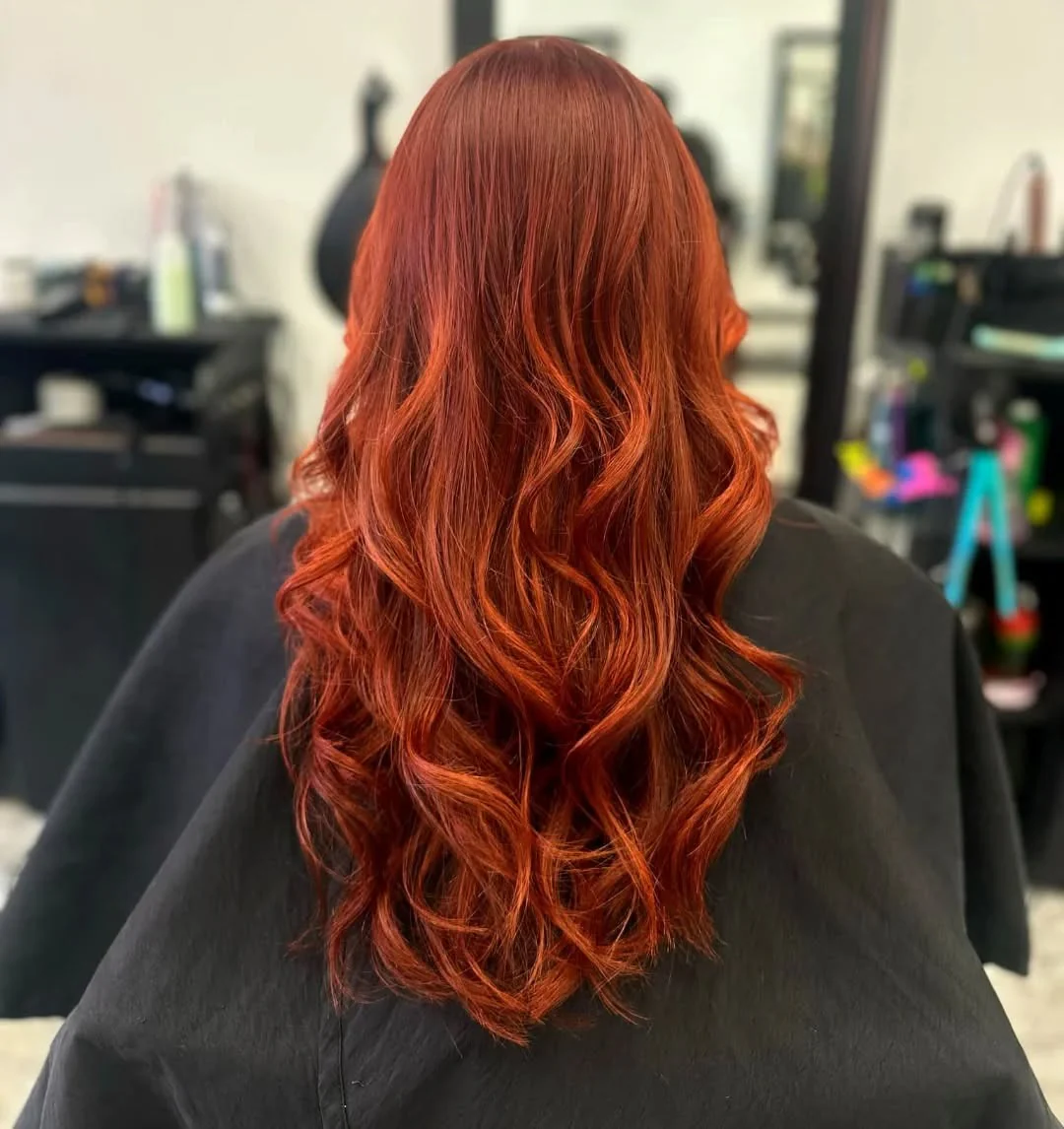
This custom shade provides a multi-dimensional, fiery color that looks expensive and reflective.
- Target Level: Level 6 (Dark Blonde/Light Brown)
- Target Tone: Copper-Red (.4 and .6)
- The Mix:
- 2 parts 6.6 (Dark Red Blonde): The base vibrant red tone.
- 1 part 7.4 (Medium Copper Blonde): Adds the reflective, almost orange-copper highlight that catches the light.
- 1 part 5.5 (Light Mahogany Brown): Provides deep, cool red-violet undertones for complexity.
- Oxidizer: 6% (20 Volume) for a rich deposit of color.
- Why it Works: This formula combines the three main warm families (Red, Copper, and Red-Violet) at slightly different levels, giving the final result incredible dimension and movement.
Pro Tips for Custom Bremod Application
1. The Strand Test is Non-Negotiable
Before applying a custom mixture to the entire head, always test a strand on a small, hidden section of hair (usually behind the ear). This is the only way to confirm the results of the formula for your specific hair type and initial level.
2. Manage Porosity
Highly porous hair (often damaged or chemically processed) absorbs color faster and darker.
- Tip: If the color ends up showing porous, mix the color with water instead of oxidizer for the last 5 minutes of processing time to slow down color set-up and prevent the ends from absorbing too much pigment.
3. Emulsify and Rinse
Before washing, add a small amount of water to hair and gently massage (emulsify) the color around the hairline and ends for about 60 seconds. This helps remove leftover color from the scalp and ensures an even end result. By mastering the three-part numbering system of the Bremod hair color chart – level, primary tone and secondary tone – you stop being a user of box color and become a chemist of custom shades. This systematic understanding unleashes the true potential of the Bremod line, allowing you to formulate, neutralize and create complex, beautiful colors that are uniquely your own.