
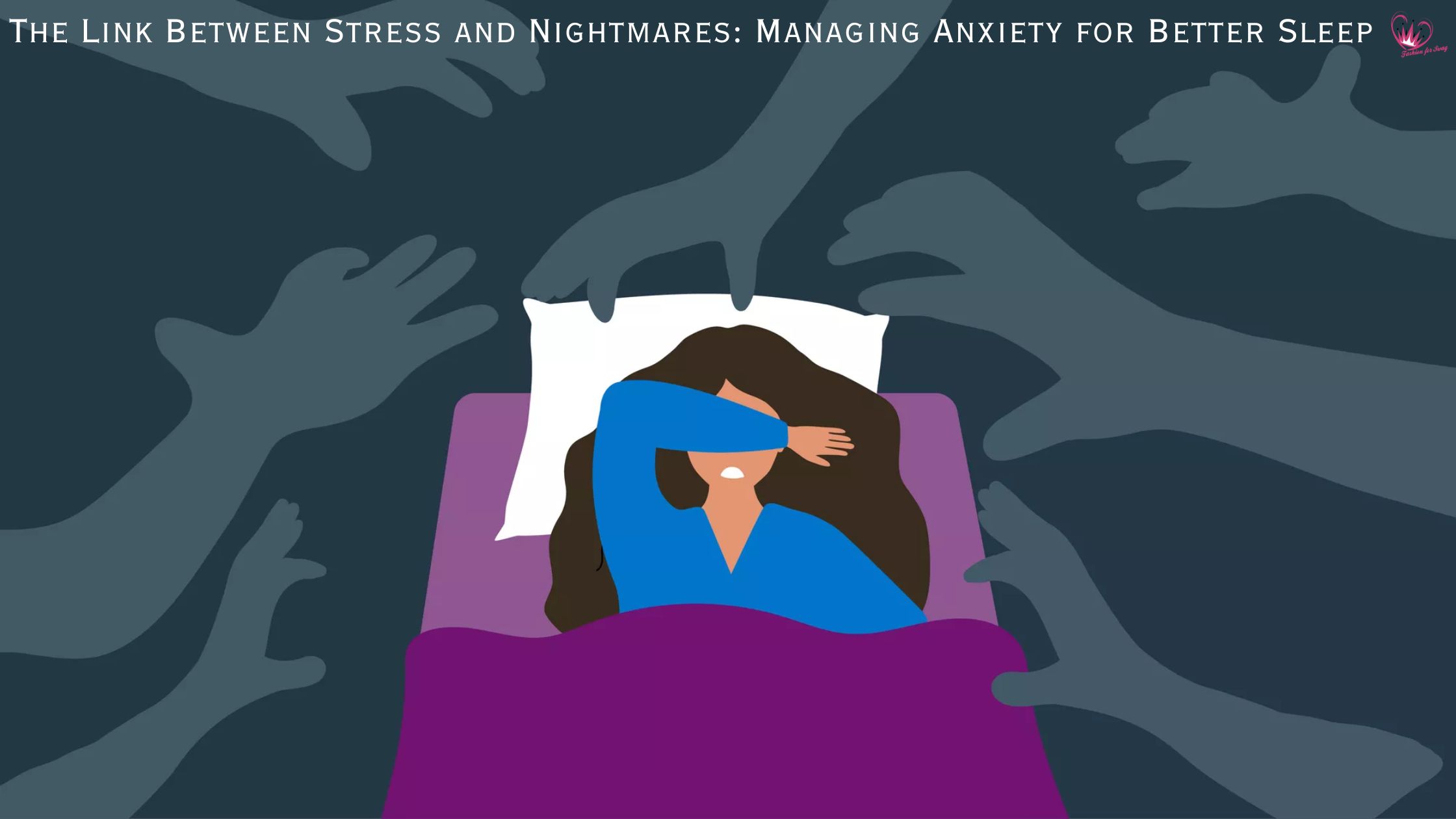
The Link Between Stress and Nightmares: Managing Anxiety for Better Sleep
We have all had that experience: waking up drenched in a cold sweat, heart hammering against our ribs, with the lingering, terrifying images of a dream still clinging to the corners of our minds. Usually, we shake it off, check the clock, and try to drift back to sleep. But in 2026, as the boundaries between work and life blur and global “poly-crises” dominate our newsfeeds, psychologists are seeing a massive uptick in chronic adult nightmares.
The culprit? Chronic psychological stress.
Nightmares are not just “bad dreams” or random neurological firings. They are often the brain’s desperate attempt to process unresolved emotions, fears, and anxieties. Understanding the biological link between stress and nightmares is the first step toward reclaiming your nights and, by extension, your days.
The Biology of the “Stress-Dream” Loop
To understand why stress causes nightmares, we have to look at how the brain handles sleep. Sleep is divided into cycles, primarily Non-REM and REM (Rapid Eye Movement) sleep. REM is where most vivid dreaming occurs.
1. The Amygdala on Overdrive
The amygdala is the brain’s “alarm system,” responsible for processing emotions like fear and anger. When you are stressed during the day, your amygdala remains hyper-reactive. During REM sleep, while the rest of your brain is trying to “file away” the day’s memories, the hyper-active amygdala can “color” these memories with intense fear, transforming a mundane dream about a work meeting into a nightmare about being hunted or humiliated.
2. Cortisol and the “Wired” Brain
Stress triggers the release of cortisol, the body’s primary stress hormone. Ideally, cortisol levels should drop in the evening to allow for sleep. However, if you are chronically anxious, your cortisol remains high. This leads to fragmented sleep and “REM Rebound“—a state where the brain stays in REM sleep longer than usual to make up for lost rest, resulting in more frequent and more intense dreaming.
3. The Threat Simulation Theory
Many psychologists believe nightmares serve an evolutionary purpose called “Threat Simulation.” The brain “rehearses” threatening scenarios in a safe environment (sleep) to prepare you for real-life dangers. When your waking life feels threatening—due to job insecurity, health anxiety, or relationship conflict—your brain kicks this simulation into high gear, leading to nightly “survival training” that leaves you exhausted.
Common Themes: What Your Stress is Trying to Say
While every individual is different, stress-induced nightmares often fall into specific thematic categories that mirror our waking anxieties:
- Being Chased: Often represents a deadline you are running from or a problem you feel you cannot outrun.
- Losing Teeth/Falling: Typically linked to a loss of control or fear of “losing face” (embarrassment) in a social or professional setting.
- Being Unprepared for an Exam: Even years after graduation, this remains the #1 stress dream. it reflects “imposter syndrome” or the fear that you aren’t ready for your current responsibilities.
- Malfunctioning Technology: A uniquely 2020s nightmare. Dreaming that your phone or computer won’t work often reflects a feeling of being unable to communicate or “keep up” in a digital world.
5 Proven Strategies to Manage Anxiety and End Nightmares
If nightmares are becoming a “silent saboteur” of your mental health, you need a two-pronged approach: managing the stress during the day and prepping the brain for safety at night.
1. Implement “The Worry Dump”
One of the main reasons we have nightmares is that we take our “to-do” lists and anxieties to bed with us.
- The Exercise: Two hours before bed, sit down with a physical notebook. Write down every single thing you are worried about, no matter how small. Then, next to each item, write one tiny “next step” for tomorrow.
- The Goal: By externalizing the stress onto paper, you give your brain “permission” to stop processing it while you sleep.
2. Practice “Image Rehearsal Therapy” (IRT)
This is a gold-standard psychological technique for chronic nightmares.
- The Exercise: During the day, think of a recurring nightmare. Now, write down a new, positive, or neutral ending for that dream. For example, if you are being chased, imagine yourself turning around and realizing the pursuer is just a lost puppy.
- The Goal: Spend 5-10 minutes a day visualizing this new ending. You are essentially “re-programming” the script that your brain runs during REM sleep.
3. Optimize the “Vagus Nerve” Before Bed
The vagus nerve is the “off switch” for the body’s stress response. You can physically stimulate this nerve to lower your heart rate and signal safety to the brain.
- The Method: Try “Box Breathing” (inhale for 4, hold for 4, exhale for 4, hold for 4) or gentle humming. These physical actions tell the amygdala that the environment is safe, reducing the likelihood of a fear-based dream.
4. The “Digital Sunset”
In 2026, we are bombarded with “doom-scrolling.” Consuming stressful news or fast-paced content right before bed keeps the brain in a state of “high alert.”
- The Rule: No screens 60 minutes before sleep. Read fiction instead. Fiction engages the creative side of the brain in a low-stakes way, providing “gentle” imagery for the brain to use during REM cycles.
5. Magnesium and Supplements (Consult a Professional)
Many people find that Magnesium Bisglycinate helps relax the muscles and calm the nervous system. However, avoid “melatonin overload,” as high doses of melatonin can actually make dreams more vivid and intense, potentially worsening nightmares for those already under stress.
When to Seek Professional Help
Occasional nightmares are a normal part of the human experience. However, you should consult a specialist if:
- Your nightmares occur more than twice a week.
- You are developing “sleep phobia” (dread of going to bed).
- The nightmares are linked to a past traumatic event (this may indicate PTSD, which requires specialized care like EMDR).
Final Thoughts: A Night of Peace is Possible
Nightmares are not a sign of weakness; they are a sign that your mind is working overtime to protect you. By acknowledging the stress you carry during the day and using the tools of “emotional hygiene,” you can guide your brain away from the theater of the macabre and back to a place of restorative rest. Your dreams should be a sanctuary, not a source of stress. Start small—with a notebook and a deep breath—and give yourself the gift of a quiet night.