

Gorgeous, Earth-Friendly Living: 8 Low-Impact Decor Hacks You Can Try This Ganesh Chaturthi
Every monsoon, our homes prepare to welcome our favorite guest: Ganpati Bappa. The days leading up to Ganesh Chaturthi are packed with bustling energy—cleaning every nook, planning naivedya menus, and brainstorming ways to make the altar look grander and more welcoming than the year before.
In that festive rush, it is easy to succumb to the lure of roadside market stalls: flimsy thermocol makhar backdrops, synthetic plastic marigold garlands, and chemical glitter that ends up embedded in our rugs for months. But thermocol never biodegrades, and plastic garlands end up choking our local landfills long after the festivities conclude.
Welcoming the lord of nature (Vighnaharta) does not require synthetic shortcuts. Traditional Indian craftsmanship offers abundant biodegradable textures, earth-toned fabrics, and organic botanicals that create a luxurious, soulful mandir setup without generating bags of plastic waste.
Here are eight creative, low-impact decor hacks to make your home look festive, welcoming, and earth-friendly this Ganesh Chaturthi.
1. Frame the Altar with Banana and Mango Leaf Backdrops
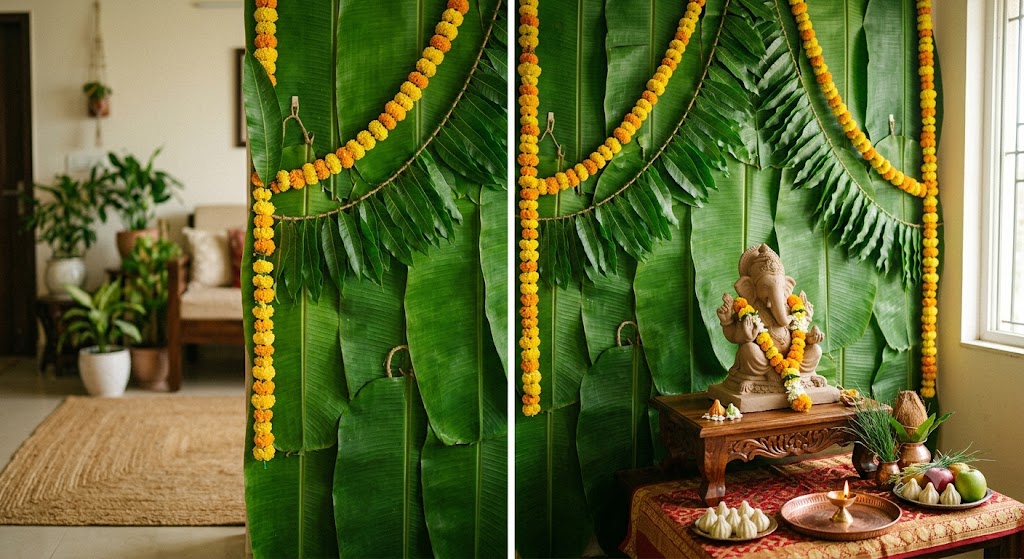
Skip the thermocol pillars and plastic sheets. The most auspicious backdrops in Indian tradition are entirely organic and compostable.
Create a lush, tropical green feature wall behind Bappa’s wooden chowrang (pedestal) using fresh plant elements:
- Secure two to three large, fresh banana leaves vertically using jute twine or small removable wall hooks to form an organic screen.
- Layer overlapping arches of fresh mango leaf torans (amra pallava), which are celebrated in Vastu for filtering negative energy.
- Weave slender strings of natural yellow and orange marigolds through the leaves for a vibrant contrast of emerald and gold.
After the visarjan, these leaves do not go to a garbage dump. Chop them up and add them directly to your home compost bin or bury them in garden soil, where they enrich your plants within weeks.
2. Drape the Mandir with Handloom Sarees and Dupattas
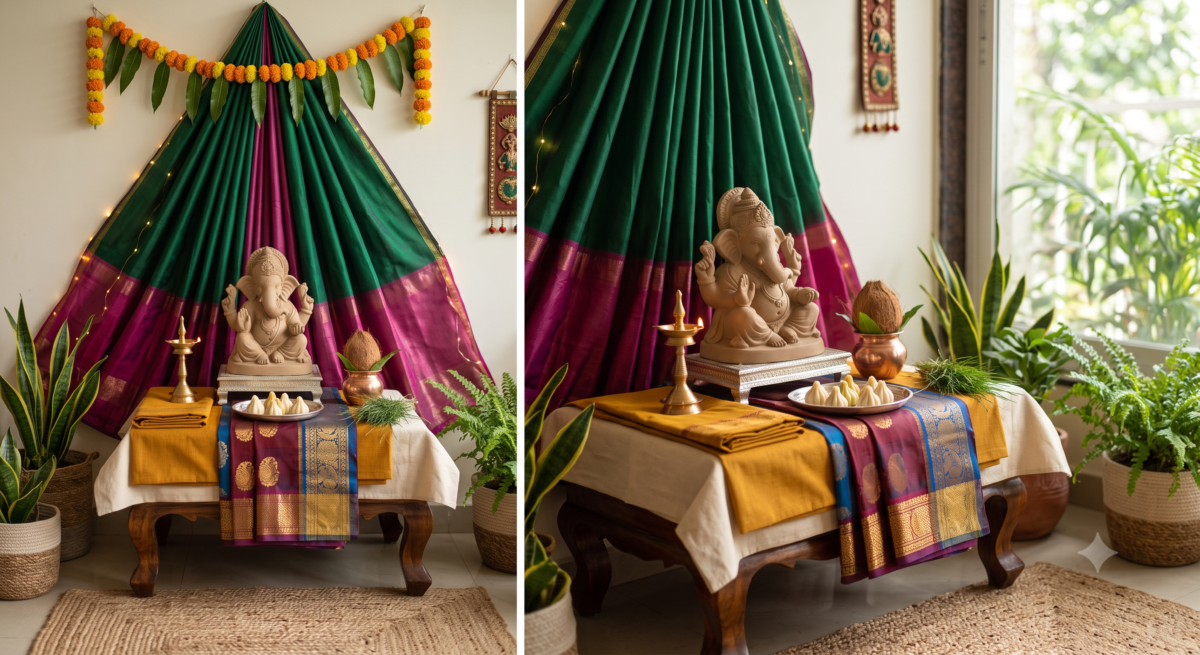
Before spending money on single-use fabric backdrops made of nylon or polyester, open up your family wardrobe. Indian textiles carry rich colors and intricate weaves that instantly lend regal depth to any sacred space.
- For the background canopy: Use a crisp, jewel-toned Chanderi, pure cotton Mangalgiri, or raw silk saree. Pleat it neatly from the ceiling or wall to cascade behind the deity like a temple curtain.
- For the altar cloth: Replace synthetic gold foil runners with a folded, border-rich Kanjeevaram or Paithani pallu.
- For contrast: Mix earthy tones—mustard yellows, deep forest greens, vermilion, and unbleached kora cotton—to mirror traditional festive palettes.
Once the festival wraps up, simply dry-clean or fold the textiles back into your closet. You produce zero garbage, spend zero rupees on disposable fabric, and surround the altar with heirloom charm.
3. Swap Plastic Fairy Lights for Terracotta and Brass Lamps
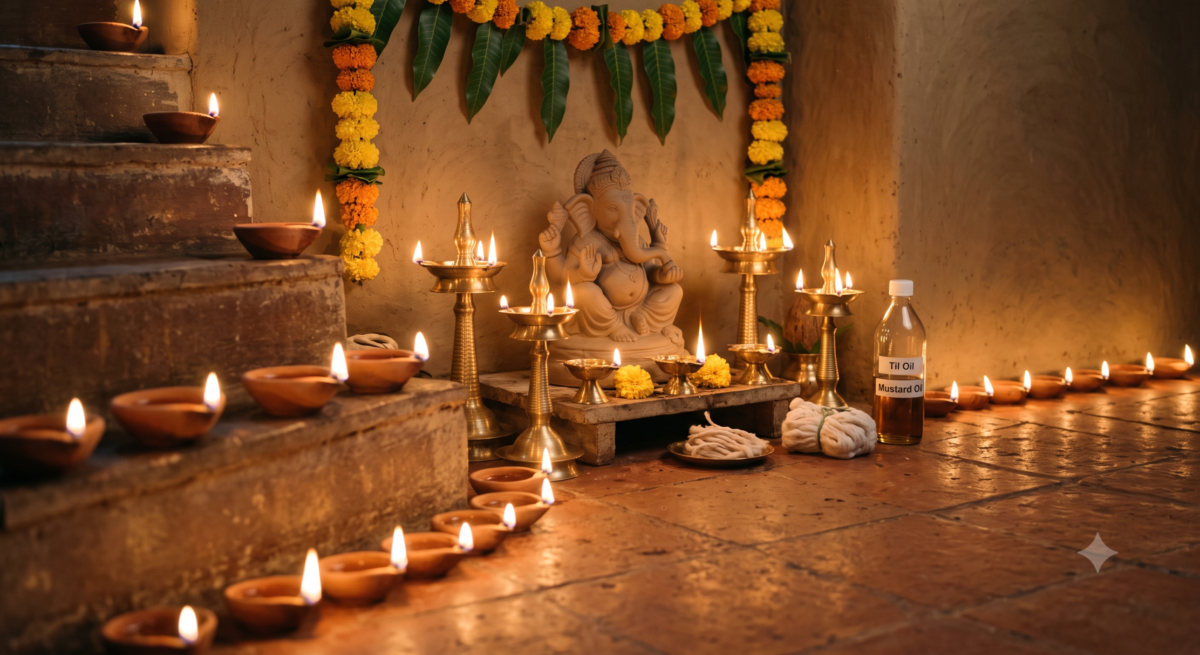
Modern battery-operated LED strings and plastic light ropes often end up broken after one season. In contrast, the warm flicker of an oil flame carries unmatched spiritual serenity and timeless aesthetic appeal.
- Gather your heirloom brass kuthuvilakkus, samais, and diyas. Clean them up naturally using a quick paste of tamarind pulp, lemon, and salt—avoid chemical brass polishes that emit harsh fumes.
- Line the floor and altar steps with raw, unglazed terracotta diyas sourced directly from local roadside potters (kumhars).
- Burn pure sesame (til) oil or cold-pressed mustard oil with organic cotton wicks instead of petroleum-based paraffin candles.
The natural earthen clay softens the light, casting long, cozy shadows that make the entire room feel peaceful and meditative during evening aartis.
4. Craft a Floating Uruli Feature with Local Blossoms
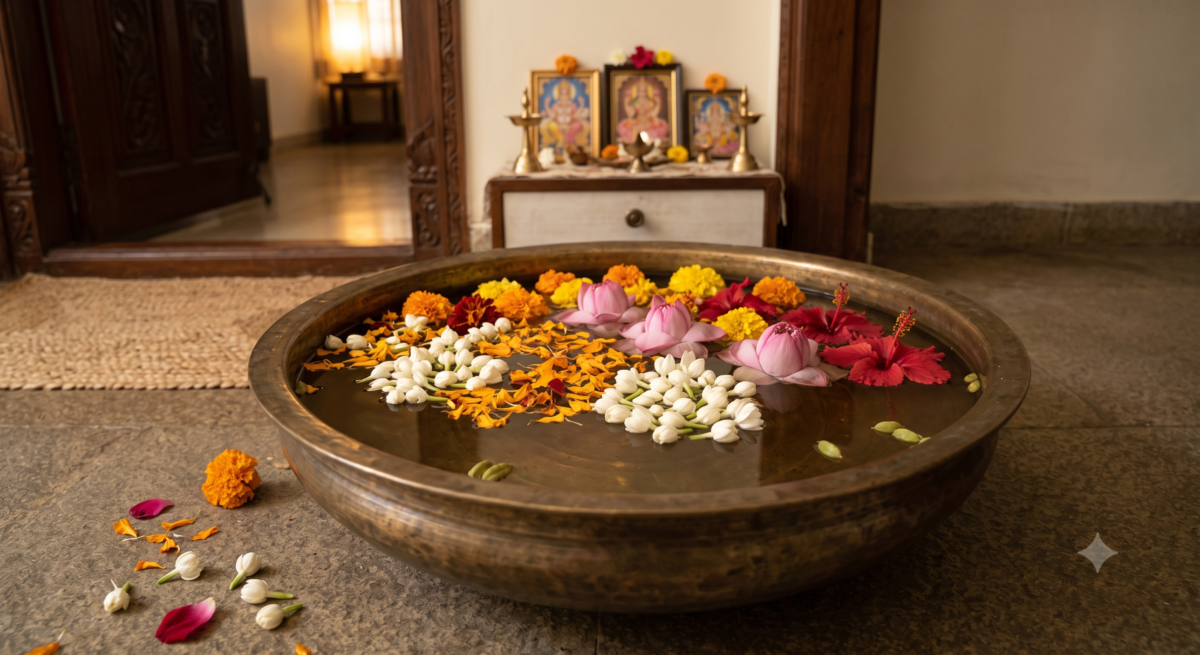
Centerpieces do not need imported flowers or floral foam (oasis foam), which is essentially non-biodegradable microplastic saturated with formaldehyde.
Set up an authentic, sensory focal point near your home entrance or at the foot of the altar:
- Take a broad, shallow brass, bronze, or terracotta uruli and fill it with fresh, cool water.
- Float whole, unstemmed local flowers: fragrant white mogra (jasmine), loose marigold petals, pink lotus buds, or local red hibiscus.
- Add a dash of powdered green cardamom or a few drops of natural sandalwood oil to the water.
Every time someone walks past the altar, the subtle movement releases a sweet, calming, natural floral fragrance that no synthetic aerosol spray can match.
5. Build Floral Garlands with Shola Pith and Real Flowers
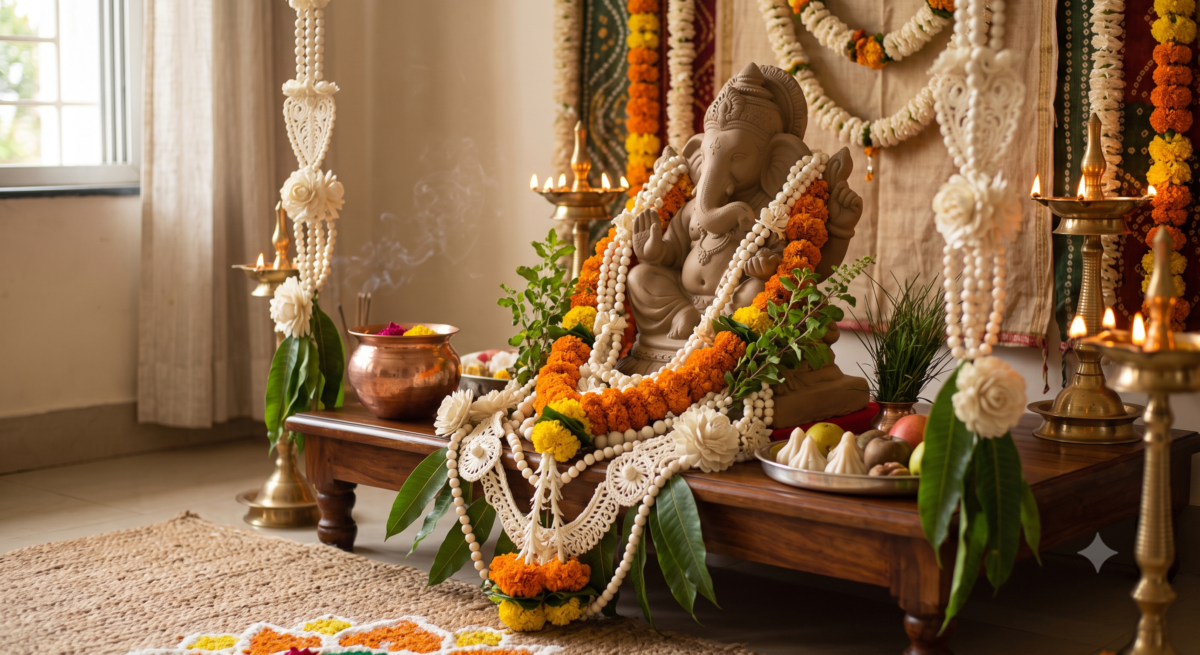
Plastic garlands might look vibrant from ten paces away, but they lack soul, texture, and fragrance.
For durable, reusable elements that look festive year after year without harming the planet, turn to Shola pith art (herbal sponge / Aeschynomene aspera):
- Shola is a completely natural, milky-white, dried plant stem crafted by artisans into intricate flowers, delicate beads, and ornate temple ornaments.
- It is feather-light, entirely biodegradable, and can be repacked into soft tissue paper and reused for years.
- Pair your white Shola garlands with fresh strings of local marigolds (genda phool) and sprigs of fragrant holy basil or green foliage.
When combined, the pure ivory of the plant pith and the deep saffron of marigolds create a royal, timeless appearance.
6. Use Handwoven Bamboo and Cane Baskets for Offerings
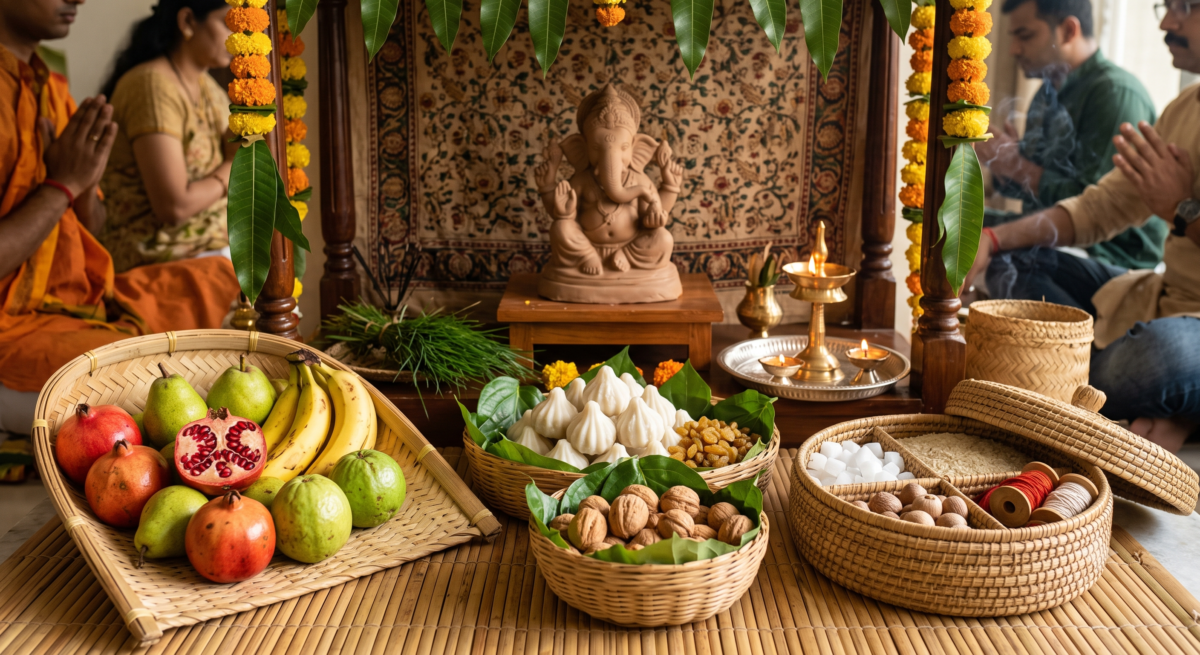
During the festival, the altar quickly fills up with offerings—modaks, fresh fruits, dry fruits, coconuts, and durva bundles. Piling them up in clear plastic bowls or disposable paper plates cheapens the aesthetic of an otherwise sacred space.
Invest in handwoven bamboo, cane, or sabai grass baskets:
- Arrange seasonal fruits like pomegranates, green pears, bananas, and guavas in wide, shallow bamboo trays.
- Line small cane baskets with fresh green betel leaves (paan) to hold fresh modaks, raisins, and nuts.
- Keep your dry puja samagri (camphor, akshata, supari, and sacred threads) organized in divided, lidded grass containers.
These woven natural fibers tie the entire rustic, organic look together while providing practical, breathable storage that keeps fruits and offerings fresher for longer.
7. Draw Floor Rangolis with Pure Stone and Flower Pigments
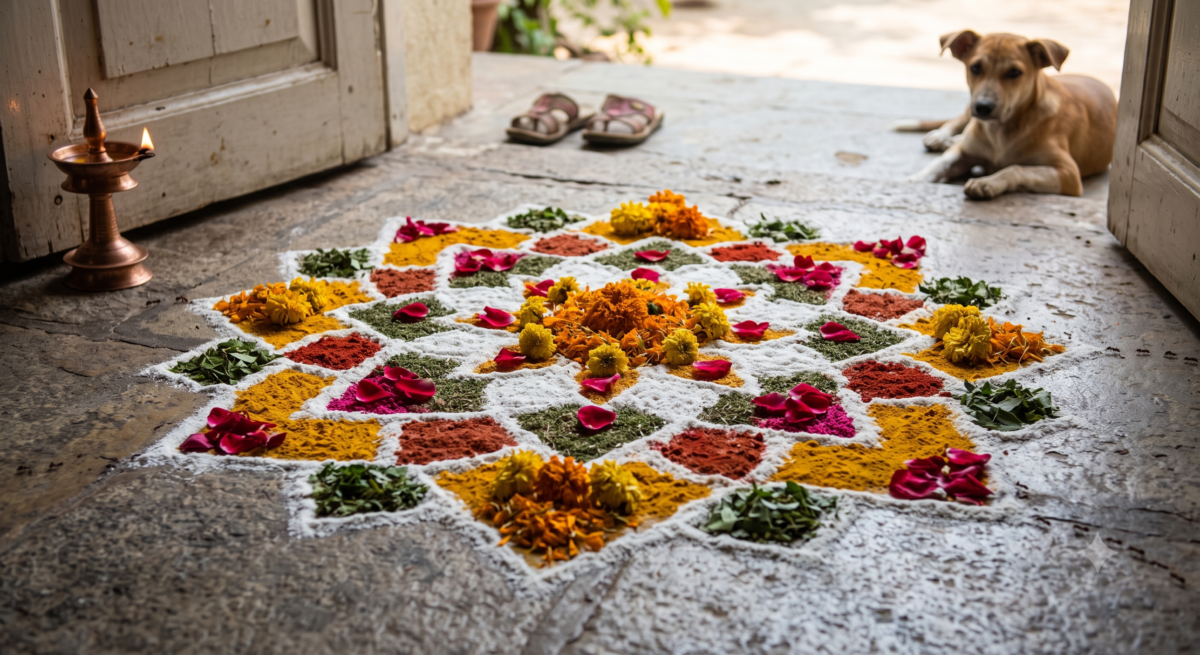
Traditional rangoli was originally meant to be a quiet gesture of charity—feeding ants and small birds with rice flour while welcoming guests with artistic beauty. In modern times, packaged rangoli powders are frequently adulterated with pulverized glass, heavy metals, and synthetic textile dyes that irritate the skin and pollute the soil when swept outdoors.
Return to conscious, natural floor art:
- Base whites: Use fine, coarsely ground white rice flour.
- Warm yellows and oranges: Use kitchen turmeric (haldi) mixed with gram flour, or fresh dried marigold petals.
- Reds and pinks: Use pure vermilion (kumkum), red brick dust, or fresh rose petals.
- Greens: Blend dried coriander leaf powder or crushed neem leaves.
A petal-and-grain rangoli laid out at your front door feels softer, richer, and completely safe for children and pets who walk across it.
8. Scent the Air with Herbal Dhoop and Camphor
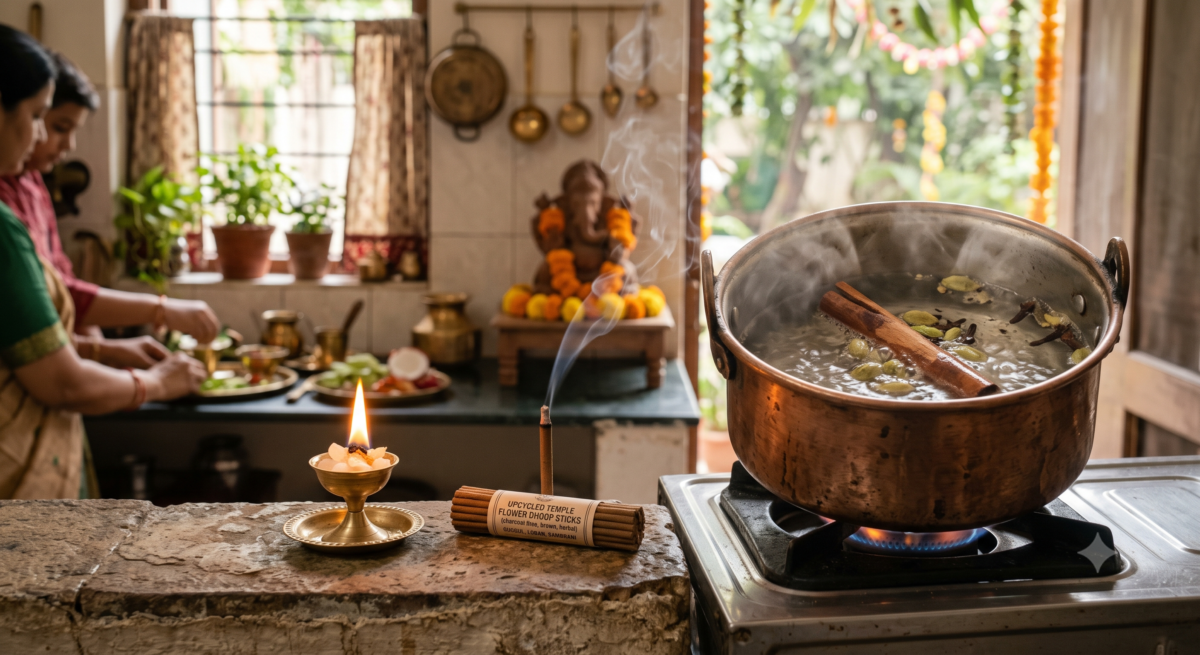
Skip synthetic plug-in air fresheners and artificially perfumed aerosol sprays. They degrade indoor air quality and clash with the natural mood of the festival.
Choose ancient, aromatic Indian natural scents that cleanse the room:
- Burn raw Bhimseni camphor on a small brass burner. Pure camphor dissolves cleanly into the air without leaving black carbon soot on your walls.
- Use charcoal-free herbal dhoop sticks made by social enterprises using upcycled temple flower waste and natural plant resins like guggul, loban, and sambrani.
- Boil a pot of water on the stove with a stick of cinnamon, crushed green cardamoms, and whole cloves for fifteen minutes right before guests arrive.
The resulting fragrance is warm, spicy, and reminiscent of a heritage temple courtyard.
Celebrating with Care
Ganeshotsav is fundamentally an earth festival. When we welcome an idol crafted from natural river clay (shadu mati), place it against living leaves, light lamps fueled by seed oils, and decorate with natural fibers, we honor the deity in his true, elemental form. This Chaturthi, let your decor reflect conscious craftsmanship. A mindful, zero-waste mandir isn’t just kind to the planet—it brings a calm, warm, and deeply personal serenity into your home that no store-bought plastic ever could.